

CEO, Digital Power Systems
What Is Digital Power?
In Digital Power, a microprocessor (MCU) takes over the complete control of the power supply. Unlike conventional analogue control, this opens up entirely new possibilities in terms of flexibility, reliability, and connectivity.
Architecture of a Digital Power Supply
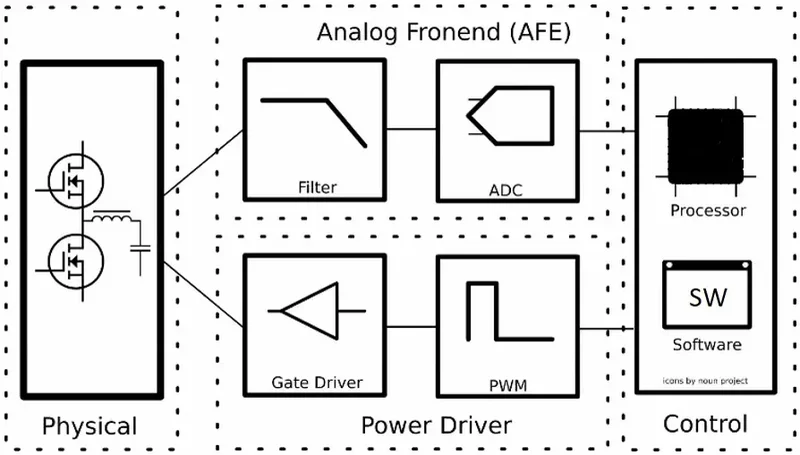
A digital power supply consists of four main components:
- Power Stage (Physical Layer): The actual energy conversion
- Analogue Front-End (AFE): Converts analogue measurements to digital signals
- Digital Microprocessor: Executes the control loop
- Gate Driver: Controls the power semiconductors
Benefits of Digital Power
IoT and Industry 4.0 Capability
Live data in the cloud enables real-time monitoring and remote diagnostics. The power supply becomes an intelligent, connected component in the industrial ecosystem.
Predictive Maintenance
Data analytics can detect and address potential failures before the system goes down. This significantly reduces unplanned downtime.
Flexibility
Parameters are digitally configurable - via software rather than hardware changes:
- Output voltage and output current
- Overcurrent threshold
- Fault response behaviour
- Error logging and diagnostics
Longevity
DPS digital power supplies eliminate electrolytic capacitors in favour of film capacitors. Joint tests with KIT demonstrated a lifetime exceeding 70 years - compared to 7 to 10 years for conventional power supplies with electrolytic capacitors.
High Efficiency
Efficiency levels of up to 95% reduce power loss and heat generation - another factor contributing to a long lifetime.